
Nearly two years on from Helene, a lot of Asheville yards still have a gap where a big tree used to be. Some people have been waiting for the stumps to come out, some for insurance, and some simply have not known where to start. The ground has settled now, the debris is mostly gone, and fall is the season to put trees back. The trees that go in over the next couple of months will do better than anything planted next summer.
This is how we approach replanting after storm damage on a Western North Carolina property: what to deal with before you plant, how to choose trees that suit the site, where to put them, and how to plant them so they are still standing in thirty years.
Why the gap is also a chance to do it differently
Most of the trees that came down in our area were not planted by anyone. They seeded in, or they were left standing when the house was built, and they grew wherever they happened to be: over the roof, over the driveway, on the edge of a cut slope. Losing one is a real loss, especially the shade and the privacy. But replanting is the first time many homeowners get to choose what grows where, and that is worth taking seriously instead of just filling the hole.
The space is also different now. Where there was deep shade there is often full sun, and the shade garden underneath may be struggling. Where roots held the soil there may be bare ground starting to wash. A good replanting plan looks at the whole opening, not just the spot where the trunk used to be.
Before you plant: stumps, soil, and the slope
Deal with the stump and the root plate
A fallen tree often tears up a disc of roots and soil, which leaves a crater on one side and a mound on the other. Grinding the stump is usually worth it where you want to plant or mow, but plan your new tree beside the old spot rather than on it. Grindings, decaying roots, and loosened soil make a poor, unstable planting hole for years. Refill a crater with native soil and let it settle through a few rains before anything goes in.
Look at what the water is doing
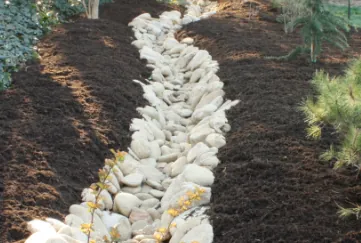
On a mountain lot the tree you lost was also a drainage device. Its canopy slowed the rain and its roots held the bank. Before replanting, watch the area during a heavy rain. If you see sheeting water, fresh gullies, or silt fanning out at the bottom of the slope, fix that first, whether that means regrading, a French drain, or a dry creek bed that carries the water somewhere useful. Our guide to yard drainage on Asheville's slopes covers the options. On steeper ground the answer may be terracing, and our retaining walls guide explains when a wall earns its cost.
Cover bare ground now
Open, disturbed ground is exactly where invasive plants take hold, and after Helene they have had two growing seasons to do it. Buncombe County Soil & Water Conservation has run free land recovery workshops at the Cooperative Extension office on this very problem, from invasive plant control to reseeding storm-opened ground with native meadows and grasses. Until your trees are established, a native groundcover, a seeded meadow, or even a thick layer of mulch keeps the soil in place and gives the weeds less room.
Choosing trees that fit the site
Right tree, right place, and plan for its full size
The most useful question is where this tree will be in fifteen years. The storm made plenty of people nervous about big trees near the house, and that is sensible up to a point. The answer is not to avoid large trees. It is to put them where their mature size fits: far enough from the house, the driveway, and overhead lines that a falling limb has somewhere harmless to land. Smaller flowering trees such as serviceberry, redbud, and dogwood belong closer in, where you can enjoy them from a window.
Lean on natives, and mix them
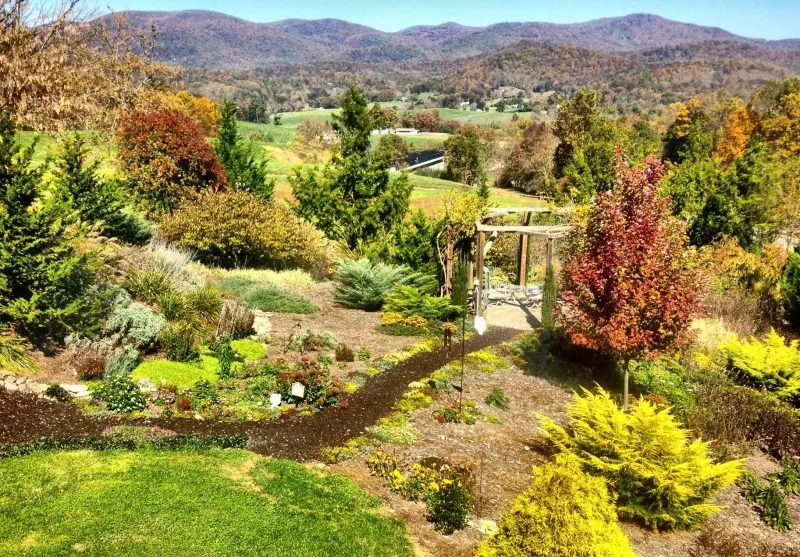
Native trees are adapted to our clay, our humidity, and our freeze and thaw winters, and they feed the birds and insects that make a mountain yard feel alive. Mix species rather than planting a row of one thing. A varied planting is less likely to lose everything to a single pest, disease, or storm, and it looks more like the woods around you. The same thinking guided the expansion of Hillary and David's wildlife garden, where storm damage became the opening for a food forest, native trees, and a meandering path through plantings that feed wildlife across the seasons.
Match the tree to the new light and moisture
A spot that was shaded for decades may now bake in the afternoon. A low corner that stays wet after rain needs a tree that tolerates wet feet, and a thin, rocky slope needs one that copes with drought. Walk the space at different times of day before you buy anything, and be honest about the conditions it has now, not the ones it used to have.
Plan for deer from day one
A young tree in an open yard is a target. Deer browse the low branches, and in late summer and fall bucks rub their antlers on slender trunks, which is exactly what a newly planted tree has. A trunk guard or a simple cage for the first few years is cheap insurance. Our guide to deer-resistant landscaping in Asheville covers which plants they tend to leave alone.
Replacing privacy fast
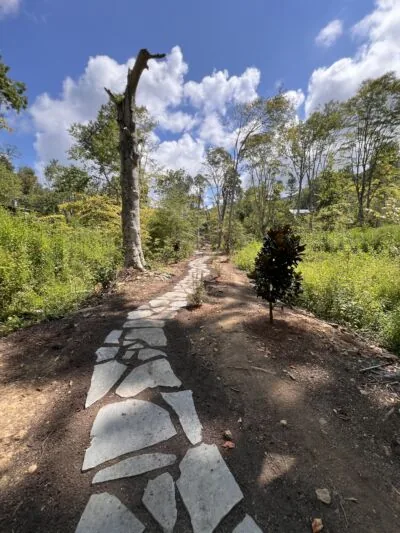
For many people the hardest part of losing trees is suddenly seeing, and being seen by, the neighbors. Canopy trees take years to close that gap, so we usually solve privacy with a layer of evergreens and large shrubs planted at the same time as the trees. That was the brief at Robyn and Bruce's Weaverville property: hurricane damage had taken out large trees around a new guest house, and we planted evergreen screening to restore privacy while leaving access routes open for future maintenance and machinery. Stagger the plants in a loose double row rather than a single straight hedge, and the screen will look natural and fill in faster.
Why fall is the time to plant
Cooperative Extension agents across Western North Carolina say it plainly: fall is the best time to plant a tree, spring is second best, and summer planting should be avoided. The reason is underground. Once the leaves drop, a tree stops spending water on foliage, but its roots keep growing through late fall and winter while the soil is still warm enough. A tree planted in October or November meets its first summer with a head start, and it needs far less watering to get there. It also gives you a winter to see the bones of the yard before committing to the next round of planting.
How to plant a tree so it lasts
According to Extension horticulturists in our region, the most common reason landscape trees die is poor planting, and it often shows up years later, just when the tree should be taking off. Most of it comes down to a few steps:
- Call 811 first. North Carolina law requires you to notify NC811 at least three working days before you dig so buried utility lines can be marked. That applies to a single tree.
- Dig wide, not deep. Make the hole only as deep as the root ball and two to three times as wide, with sloped sides so roots can spread into the surrounding soil.
- Set it high. The root flare, where the trunk widens into the roots, should sit at or slightly above the surrounding grade. Planting too deep is one of the most common ways to lose a tree slowly. In heavy clay that drains poorly, err on the high side.
- Strip the packaging. Remove as much of the burlap, wire basket, and any twine or strapping as you can once the tree is in the hole. Left on, they can girdle roots and the trunk for decades.
- Backfill with the soil you dug out. Firm it by hand and foot to remove air pockets. Do not add fertilizer to the hole.
- Mulch like a doughnut, not a volcano. Two or three inches of mulch over the whole planting area, pulled back from the trunk. Mulch piled against the bark invites rot and pests.
- Water on a schedule. Soak it at planting, then water regularly through the first weeks and deeply through dry spells for the first year or two. Fall rain helps, but it is not something to count on.
On a slope, build a small berm on the downhill side of the tree to hold water where the roots can use it, and stake only if the site is exposed enough that the tree would otherwise rock in the wind. Remove stakes and ties once the roots have taken hold.
What drives the cost of replanting
We do not publish per-tree prices, because on mountain properties they mislead more than they help. The main factors are tree size at planting, access for equipment, how much stump and debris work comes first, and whether the slope needs drainage or stabilization before anything can be planted. Smaller trees usually establish faster and often catch up with larger ones within a few seasons, so bigger is not always better value. The most expensive mistake is a tree planted in the wrong place, because you pay for it twice.
We have been designing and planting landscapes across Asheville, Buncombe County, and the Western North Carolina mountains since 1997, and much of our work since the storm has been exactly this kind of recovery. Browse the projects we have built, where you will also find answers to the questions we are asked most often, see our full list of landscaping services, or schedule a consultation and we will walk your property and help you plan what to plant, where, and when.
Frequently asked questions
Is fall a good time to plant trees in Asheville?
Yes. Fall is the best time to plant trees in the Western North Carolina mountains, with spring second and summer the season to avoid. Once the leaves drop the tree stops losing water through its foliage, but its roots keep growing through late fall and winter while the soil is still warm, so a tree planted in October or November starts its first summer with a head start and needs far less watering.
Should I plant a new tree where the old one fell?
Usually beside it rather than on it. Stump grindings, decaying roots, and loosened soil make a poor, unstable planting hole for years. Grind the stump if you need to use the space, refill the crater with native soil, let it settle through a few rains, and set the new tree a little to one side, somewhere its full mature size fits.
What trees should I plant to replace ones lost in a storm?
Match the tree to the conditions the space has now, which is often much sunnier than before, and plan for its size at maturity. Keep large shade trees far enough from the house, driveway, and overhead lines, and put smaller natives such as serviceberry, redbud, and dogwood closer in. Mix several native species rather than planting one kind, so a single pest, disease, or storm cannot take out everything at once.
How do I get privacy back quickly after losing trees?
Canopy trees take years to close the gap, so plant a layer of evergreens and large shrubs at the same time as the trees. Set them in a loose, staggered double row rather than a single straight hedge; it looks more natural and fills in faster. Protect young plants from deer, because a browsed screen is not a screen.
Do I need to call 811 before planting a tree in North Carolina?
Yes. North Carolina law requires you to notify NC811 at least three working days before you dig, even for a single tree, so buried utility lines can be marked. It is free, and it is the first step on every planting job we do.
Thinking about a project like this?
We've been designing and building landscapes across Asheville and Western North Carolina since 1997. Tell us about your property and we'll walk it with you.
Schedule a consultation or call 828-624-5136