

Water decides how long everything else in a mountain yard lasts. When rain runs where nobody planned for it to go, it strips mulch and topsoil, undercuts paths, and leans on walls until something gives. Drainage and erosion control means giving that water a route and holding the ground in place while it travels.
What we do
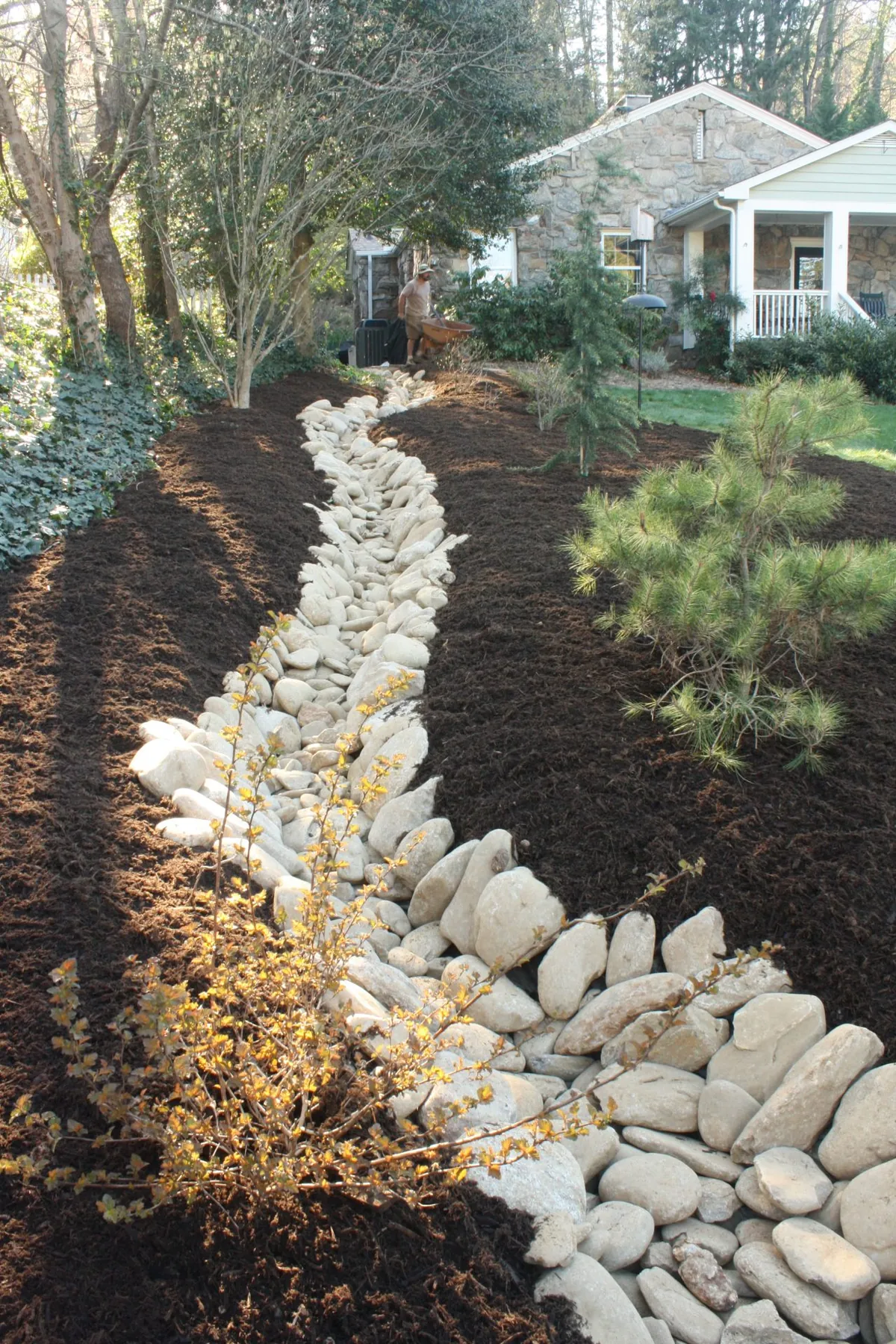
Natural Scapes has been a design-build landscaping company in Asheville since 1997, run from a studio in West Asheville. Drainage is one of the services we offer by name, for residential and commercial properties alike, and a typical scope draws on these line items:
This page sticks to what we do and how a job runs. For the mechanics, our guide on how French drains, dry creek beds and swales compare explains each method. Drainage sits beside our other landscaping services, and on a full landscape project it is never bolted on at the end; the water plan is part of the design from the first sketch.
The ground we work on
Very few lots here sit flat, and rain that lands on a slope gathers speed on its way down. Below the topsoil, most yards hold red clay: packed down, it sheds water like a roof, while the wet layers underneath stay soggy and, come winter, freeze and heave whatever rests on them. Add the hard downpours these mountains get, and a small wet patch can grow into a gully within a season or two.
Hurricane Helene made all of this visible. Plenty of Asheville yards still carry the cuts, lost paths and tilting walls it left behind, and on some properties it also brought down big trees that had been holding a bank together. If trees came down too, read our replanting after storm damage guide for what belongs in their place.
Signs to watch
Most homeowners reach out after one of these turns up, and the sooner we see it, the smaller the repair usually is:
One exception matters. If the ground itself seems to be on the move, with new cracks opening along the top of a bank, trees or posts beginning to tilt, a bulge forming at the bottom, or springs appearing where there were none, your first call should go to a geotechnical engineer, and our guide to landscaping a steep slope explains why.
Start to finish
Every job opens with a site visit. We go over the property with you and study the grade, the path water follows when a storm moves through, the soil, how equipment would reach the work, and what you want the space to do for you once it is dry.
Our designers then draw a single plan in which grading, drainage, stonework and planting are worked out together, so the water work and the finished garden come from the same hands. You receive a comprehensive estimate, and we follow it with a call to go through every line together. Those numbers tend to hold: across 2025, 97% of clients paid the exact figure on their estimate.
On site, the order rarely changes. Water and grade come first, walls and base next, then surfaces, then planting, because nothing above ground survives if the water below it is still wrong. If a wall or slope repair calls for a permit or an engineer, we arrange that as part of the job. A typical project runs from a few weeks up to a couple of months.
Natural Scapes has a $20,000 minimum on every project, and drainage work is no exception. We are licensed in North Carolina (CL.1862), stand behind our work with a 5-year workmanship warranty, and hold a 4.9-star Google rating. Plans come from our designers, Bella (Isabella) Hatfield and Michelle-Marie Nelson. Horticulturalist and outdoor living consultant Tim Jones steers the plant choices, operations director Hannah Williams keeps each job on schedule, and owner Tommy Klein leads the company. You can meet the people behind your project before the first visit.
From our projects
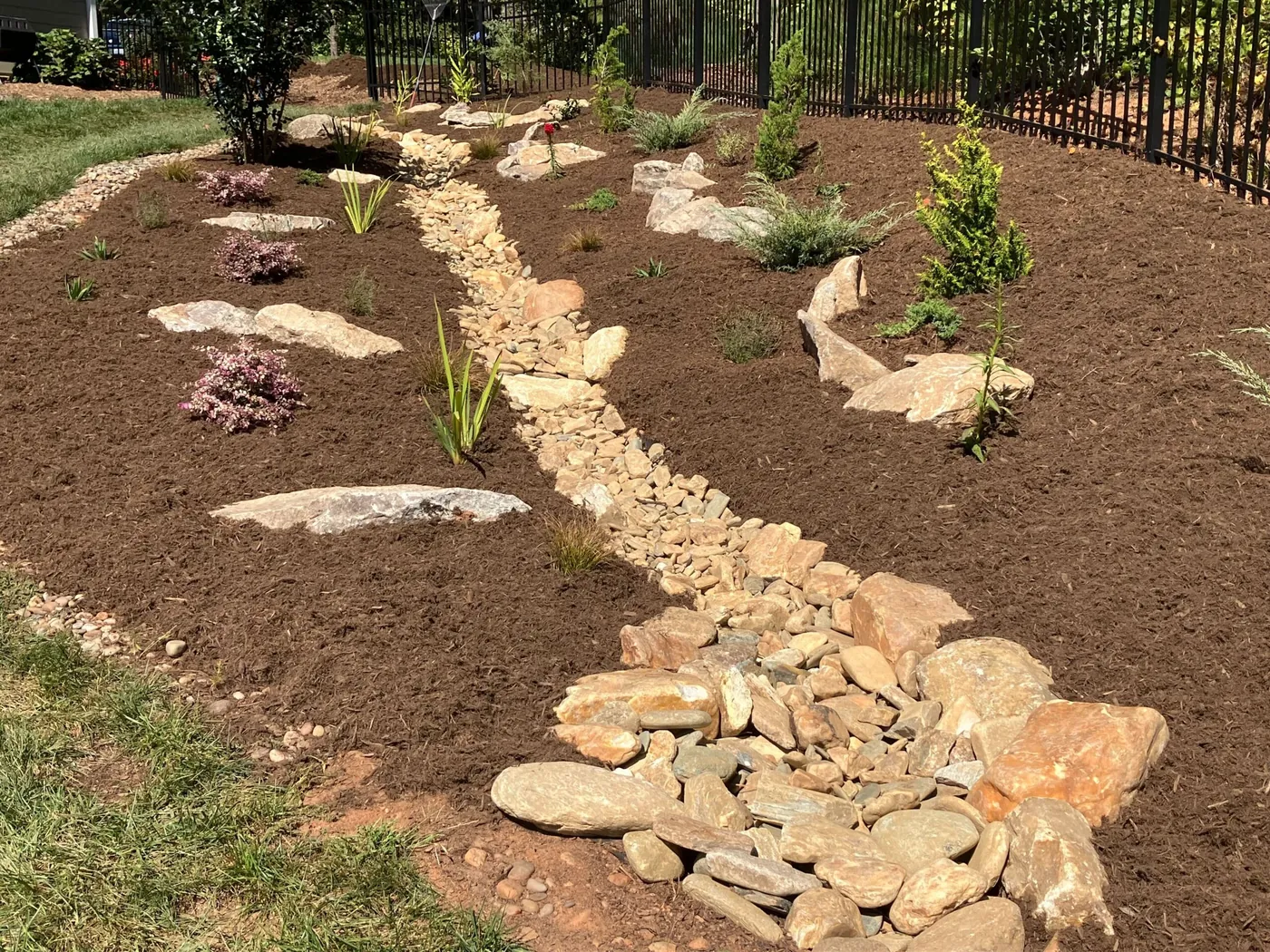
On this mountain new-build landscape, moving water off the lot was not optional, so we made it the feature. Dry river-rock beds wind between the plantings, while dry-stacked walls and staggered boulder terraces hold the grade and a staircase leads down to the pool below.
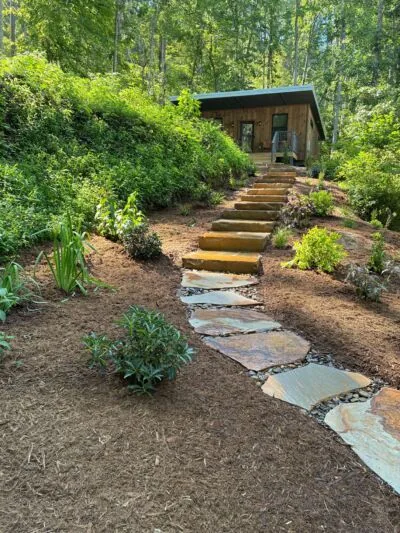
Robyn and Bruce, repeat clients of ours, needed safe footing down a steep slope to their new guest house, and that slope carried heavy rainwater and drained poorly. For their landscaping in Weaverville, the answer was a lasting crab-orchard and flagstone route in place of another short-term gravel patch, with water-loving plants set along the path to soak up runoff and evergreen screening where the hurricane had taken trees. The full story is on the Weaverville stone stairway project page.
You can browse more of our Asheville landscape projects to see how water handling shows up across different lots.
Built in, not added on
Stone and pavement change where rain goes, so drainage is part of everything hard we install. Each wall we put up gets a drain behind it, and every patio or walk is pitched with a planned path for its runoff. Take a look at the patios, walls and stone steps we build, or read what keeps a retaining wall standing on a mountain lot.
Service area
From our West Asheville studio we handle drainage and erosion projects in Asheville, in Weaverville and throughout Buncombe County. Bigger projects can take us beyond the county line, into the surrounding Western North Carolina mountains.
Good to know
Yes. Drainage is a service we offer in its own right, not only inside a bigger landscape. Our $20,000 project minimum applies to every job, drainage included, and in practice a drainage fix is often planned together with grading, a wall or new planting, since each of those affects where the water ends up.
We walk the property with you and study the grade, where water travels and collects during a storm, the soil, how equipment could get to the work area, and how you want to use the yard once the water is handled. That walk is what the plan and the estimate are built from.
Yes. Storm-damaged ground is a big part of what we see now: gullies cut through lawns and beds, paths that washed away, and walls that began to lean. We rebuild the grade, give the water a planned route, and hold the soil with stone and planting. If the storm took trees as well, see the storm-damage tree replanting guide for choosing replacements.
It can, and on our favorite projects that is the whole idea. At a mountain new-build, dry river-rock beds made a drainage requirement into part of the garden, and in Weaverville a stone stairway lined with water-loving plants fixed a wet, steep route to a guest house. Both are written up in our project portfolio.
When the ground itself is shifting: fresh cracks along the crest of a bank, leaning trees or posts, a bulge at the base, or springs showing up where there were none. Those signs call for a geotechnical engineer first. When a wall or another part of our project needs engineering, we bring it in as part of the work, and our steep slope guide goes into more detail.
Keep exploring
Terraces, planting and erosion fabric for hillsides too steep to mow, plus when a slope needs a permit.
Read the slope guideStone, boulder and block walls compared, and why water behind a wall decides how long it stands.
Read the retaining wall guideWhat to plant back after Helene took trees from an Asheville yard, and where new trees belong.
Read the replanting guideEvery article we have written on stonework, planting, water and design for mountain properties.
Browse the blogNext step
Set up a consultation and we'll come out, walk the lot alongside you, trace where rain runs, pools and cuts, and tell you plainly what fixing it would involve. A reminder that our minimum for any project is $20,000.
Book a property walk