

Home › Western North Carolina
Natural Scapes plans and installs landscapes for mountain homes from a studio in West Asheville, working in Asheville, Weaverville and Buncombe County and out into the surrounding Western North Carolina mountains.
A mountain yard asks different questions than a level lot in a subdivision. Where does the rain go once it leaves the roof? What keeps the bank behind the house from slumping? Which shrubs will still be standing after the deer pass through? Good landscape design here answers those first, and only then turns to how the space should look.
We have worked as a design-and-build company since 1997, so a single team carries each project from the first walk around your property to the last plant in the ground. If you want to know who we are before anything else, start with our landscaping company in Asheville. If your project is mostly stone, the page on hardscaping in Asheville goes further into walls, patios and steps.
Mountain sites
A crew that mostly works on level suburban ground can lay sod and set shrubs almost anywhere. Up here the plan has to account for grade, runoff, soil, wildlife and weather before a single plant is picked, and the planting, stonework and drainage all have to agree with one another. Keeping design and installation in the same hands is how we make sure they do.
Every job begins on site. We walk the property with you, watch how the ground falls away, look for traces of past runoff, and talk through how your household actually wants to use the yard. From there we draw one plan that combines grading, drainage, stone and planting, and you get a written estimate before work starts. The people who install it work for the same company that drew it, so the thinking behind the design survives the build.
What changes on a mountain lot
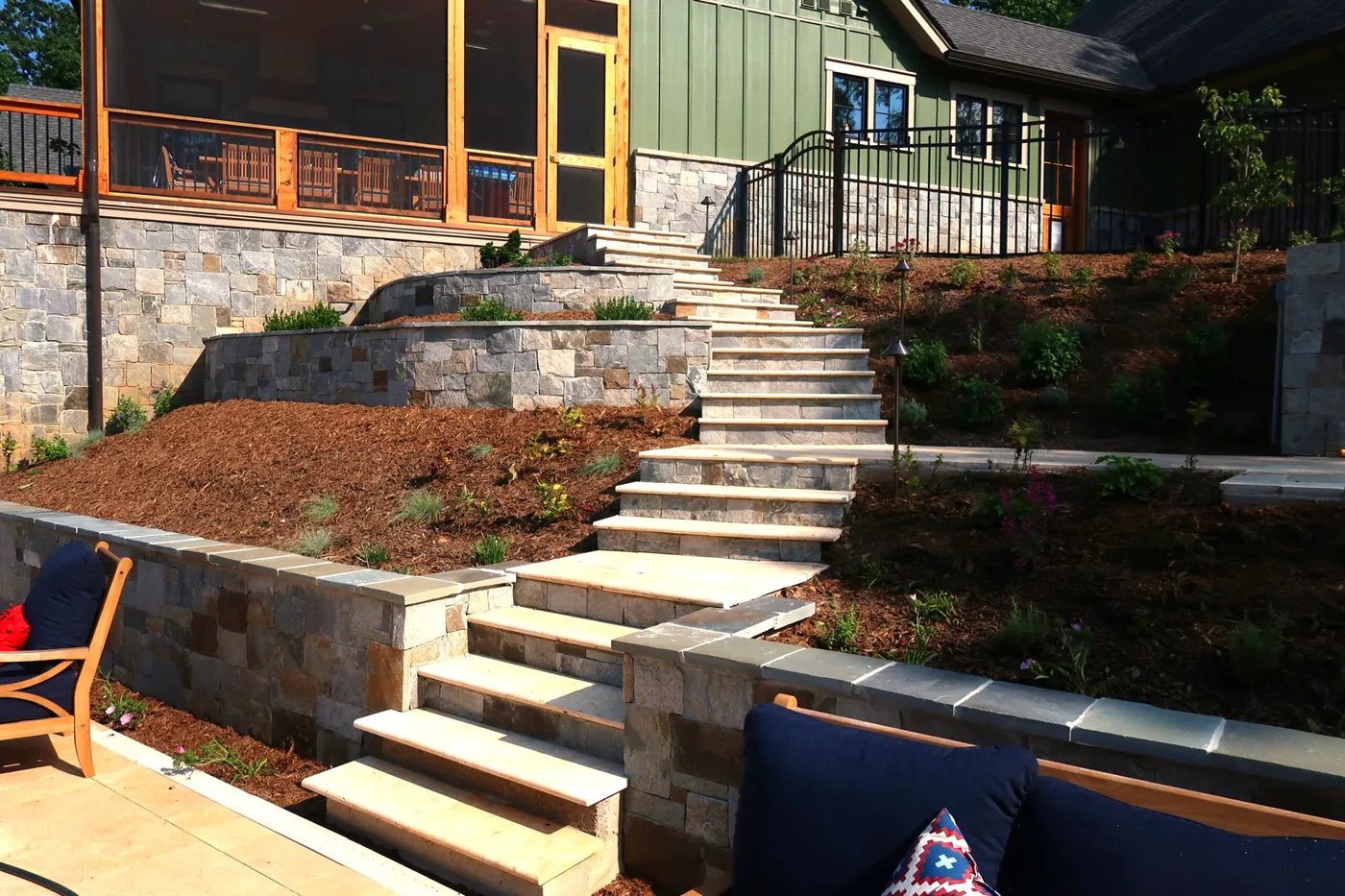
Most homes in these mountains sit on a hillside, and a hillside wants to move downhill. Breaking a long bank into a series of short walls with planted soil between them turns ground you cannot use into beds and paths you can. Bigger grade changes call for a properly built retaining wall with drainage behind it. Our guides to landscaping a steep slope in Asheville and picking a retaining wall for a mountain property cover both in detail.
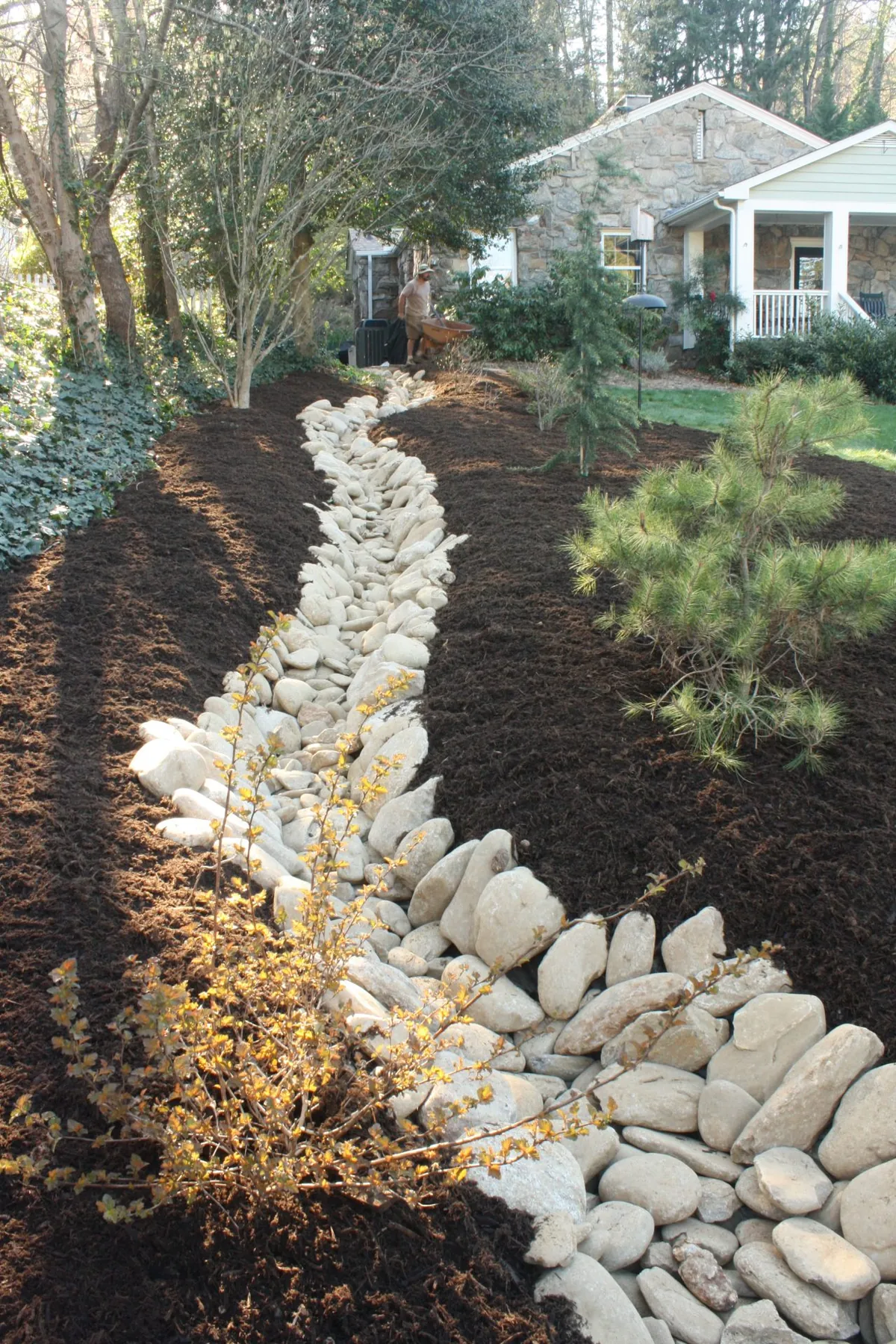
Red clay sheds rain instead of soaking it up, and mountain storms deliver a great deal of water in a short time. On a slope that pairing carves gullies, undermines walls and pushes water toward foundations. We trace where the water enters and leaves the property, then use regrading, buried drains, planted swales or a rock-lined channel to send it somewhere harmless. The Asheville yard drainage guide explains how we choose between them.
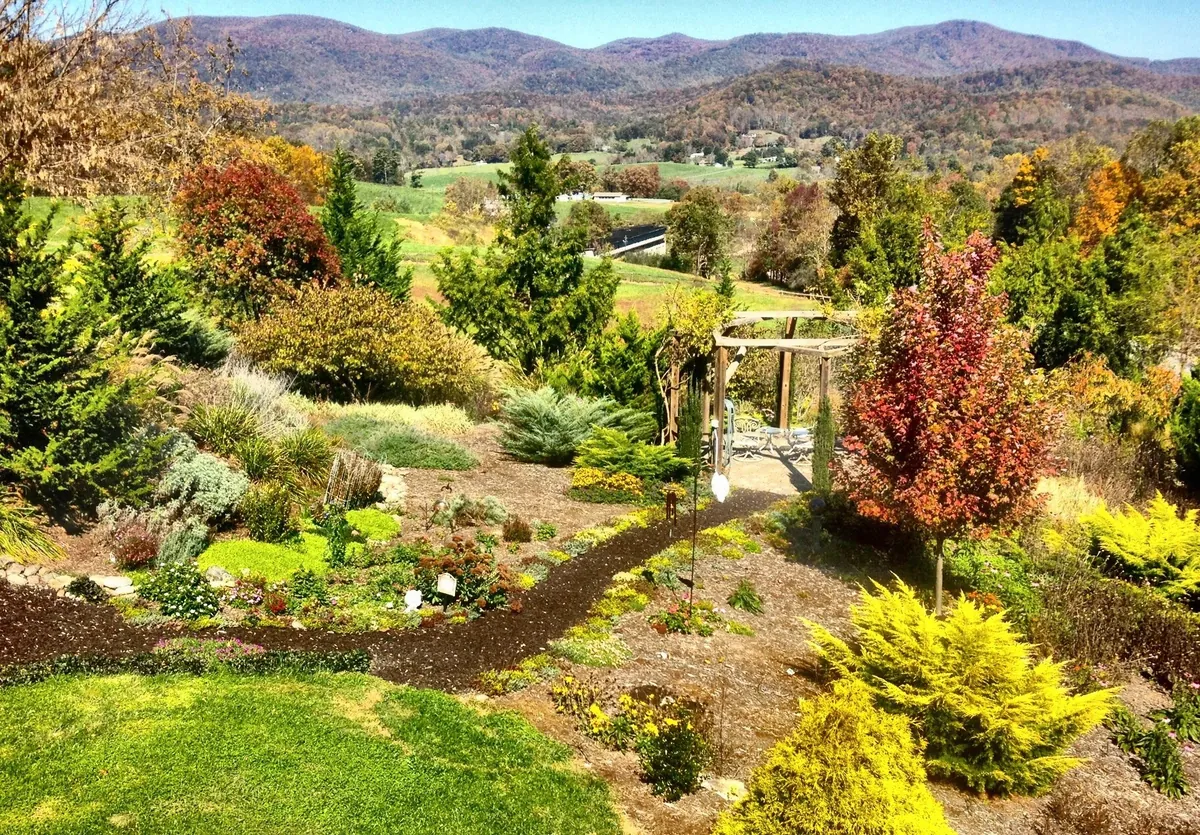
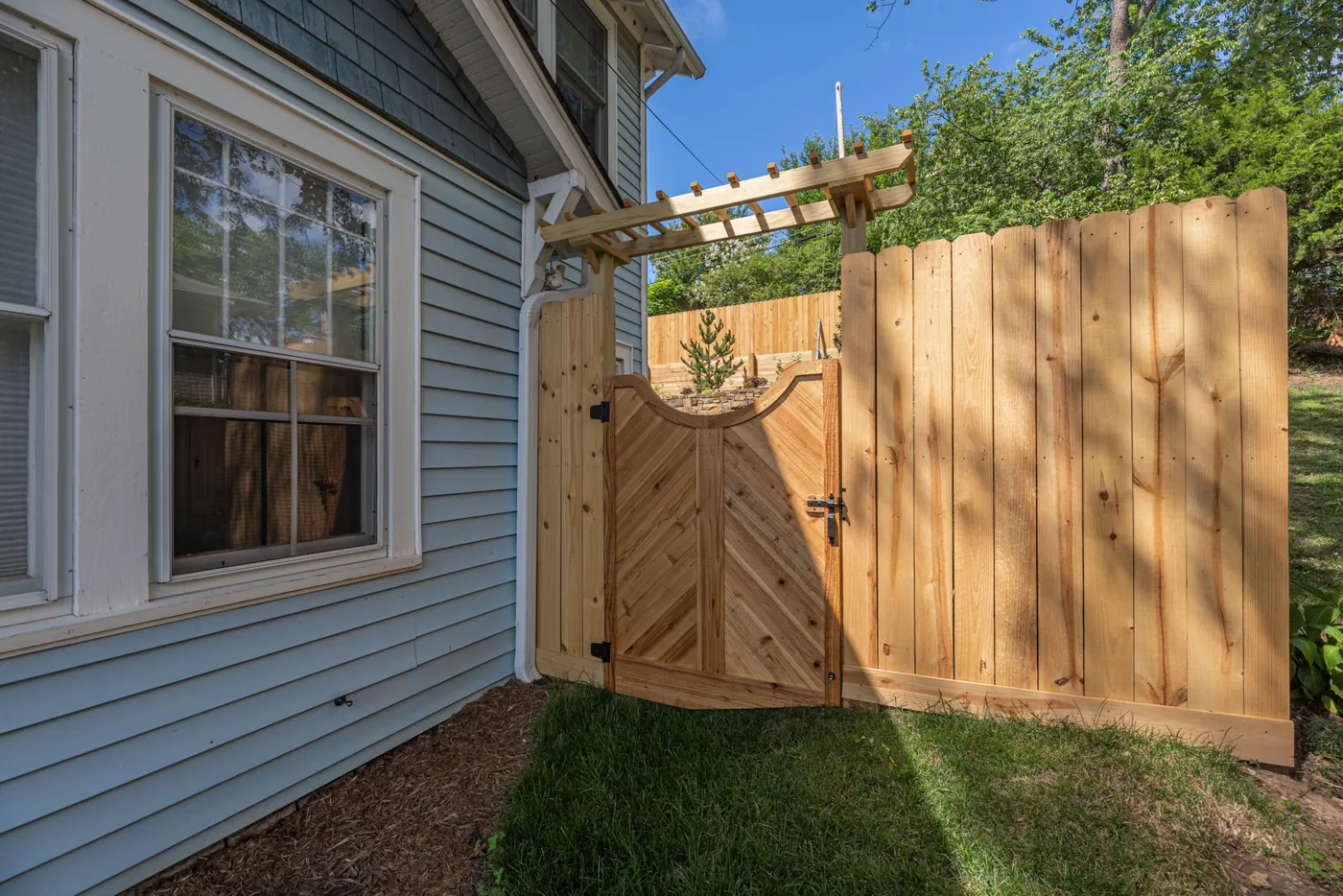
Deer browse nearly every neighborhood we work in, from in-town lots to wooded ridges. Since no plant is completely safe from them, we design around them: leaning on species they tend to pass over, putting the plants they love where those can be protected, and recommending fencing when the stakes justify it. The specifics are in our deer-resistant planting guide for Asheville.
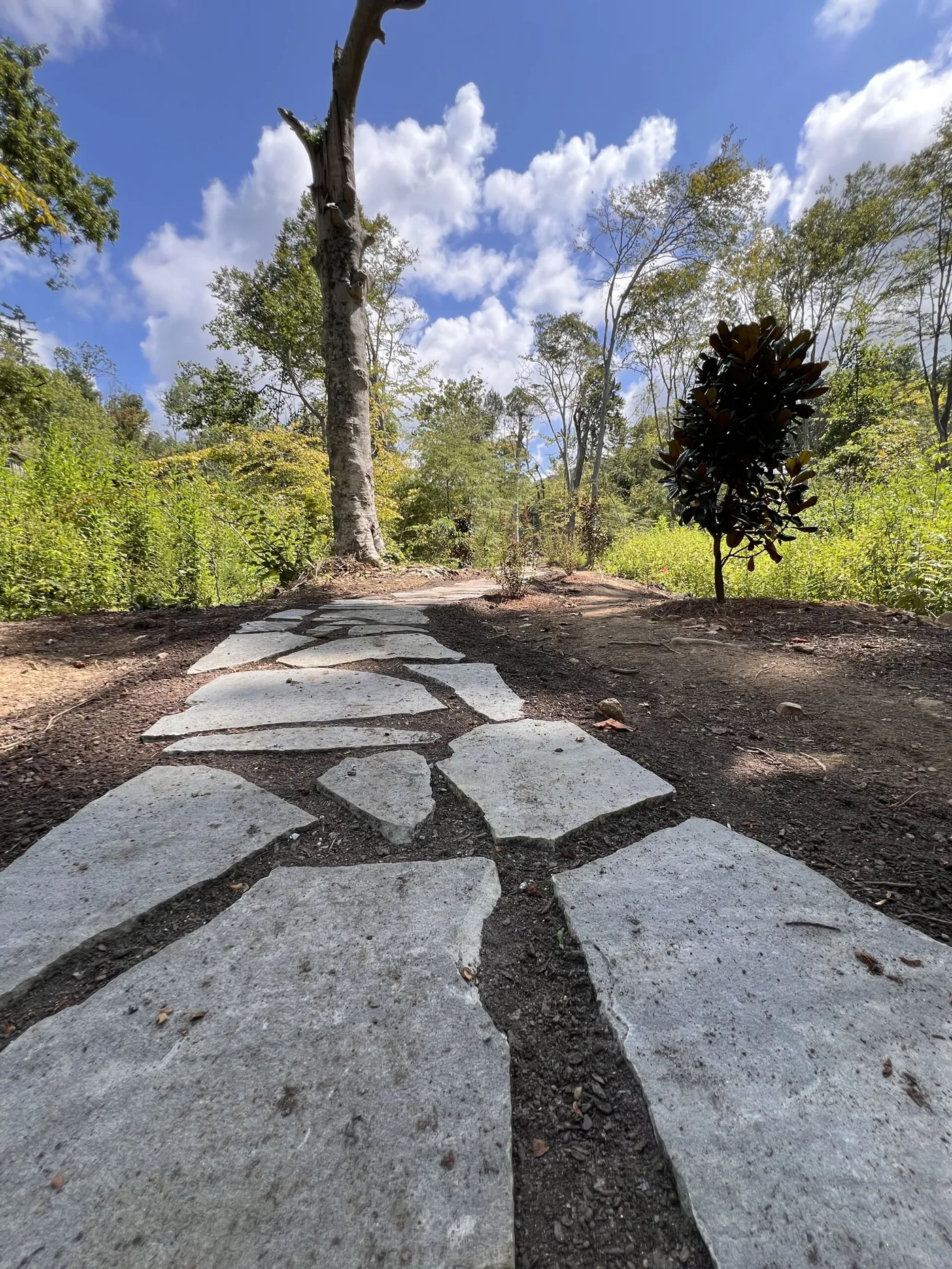
Species native to the Southern Appalachians already cope with our soil, rainfall and winters, and they feed the birds and pollinators that live here. We build planting plans around them wherever the site allows, as we did when expanding the wildlife garden for Hillary and David in Asheville. Our native landscape design guide lays out the approach.
A patio needs flat ground, and on a mountain lot flat ground has to be made. That means cutting into the hill, filling below it, holding the edges with walls, and setting the paving on compacted stone so freezing clay cannot heave it. Our comparison of flagstone and pavers for Asheville patios helps with the surface, and the same base work sits under every path and set of steps we build.
Elevation and microclimate
Conditions shift over very short distances in Western North Carolina. A house on an exposed ridge can catch wind and cold that a neighbor in a sheltered cove never feels. A valley floor can hold chilly air on still nights, so frost tends to come earlier and linger later there than on the slope just above. Sun matters as much as height: a bank facing south bakes in midsummer, while one facing north may stay damp and shaded for most of the day.
So we pick plants for the spot rather than for the region as a whole. During the site visit we note exposure, wind, shade, soil moisture and where cold air is likely to pool, and the plant list follows from what we find. It is also why we are wary of one-size planting calendars. The right timing depends on your particular lot, and we will tell you what makes sense for it.
Hiring well
Whoever you hire, a few simple checks will tell you a lot about whether they are ready for a mountain property.
Photos of level lawns and foundation shrubs do not show that a company can handle a steep, wet or wooded lot. Ask to see finished slopes, walls and drainage, ideally on ground like yours. Our own Asheville landscape projects include a stone stairway in Weaverville, a pool-deck landscape for a mountain new-build, a West Asheville retreat built to need little care, a wildlife garden, and a pet-friendly backyard in Asheville.
A written scope should state what is being graded, how water will be handled, what goes underneath any patio or path, and which plants are going where. When two bids are far apart, the scope is usually where the gap hides. A vague estimate makes it hard to compare companies and harder to hold anyone to the result.
Find out whether the designer and the installers belong to the same business, and check that the contractor carries a license and insurance and puts its workmanship under warranty. For the record, Natural Scapes holds NC license CL.1862, backs its installations with a 5-year workmanship warranty, has been building in these mountains since 1997, and has 117 Google reviews you can read for yourself.
Service area
Our studio is in West Asheville. We take on residential landscapes throughout Buncombe and Henderson counties, and we travel farther into the surrounding mountains when a project calls for it.
Good to know
Yes, within reason. Much of our work is in Buncombe County, we also build in Henderson County, and we go farther into the surrounding Western North Carolina mountains when a project suits us, as the mountain new-build in our portfolio shows. Every job starts with a site visit, so call 828-624-5136 and we can tell you quickly whether your property is in range.
Ask how they will deal with the slope, where the runoff will go, how they prepare clay before planting or paving, and how they plan for deer. Ask whether the same company builds what it designs, and ask to see finished hillside projects. A designer who answers those clearly, before talking about plant colors, understands mountain sites.
Mostly because of work you never see once it is finished. A slope usually needs grading, walls or terraces, drainage, and a compacted base before any surface or bed goes in, and a steep or tight lot can limit machine access so more has to be moved by hand. We do not quote by the square foot for that reason. Our minimum project size is $20,000, and after a site visit we can tell you what your yard would take.
Often, yes. Exposure, wind, shade and cold-air pockets vary a lot from one mountain lot to the next, so a plant that does well in a sheltered in-town yard may struggle on an exposed ridge. We choose plants for the conditions on your site instead of working from one list for the whole region.
Keep exploring
A blank lot around a brand-new home turned into a guest-ready pool deck landscape with drainage that looks like part of the design.
See the new-build projectSafe, lasting access down a steep, runoff-prone slope to a new guest house, with evergreen screening to restore privacy.
See the Weaverville projectA small yard reworked for entertaining, with open lawn for an energetic dog and a plant palette chosen to be non-toxic.
See the pet-friendly projectPlain-spoken articles on slopes, stone, water, planting and outdoor living for homes in Asheville and the surrounding mountains.
Read the guidesLet's begin
Tell us about your land and what you hope to do with it. We will walk it with you, read the slope and the water, and design a landscape that suits the site rather than fighting it. Our minimum project size is $20,000.
Book a site visit